





















Types of Earring Backs: A Complete Guide
When choosing a pair of earrings, the backing can make just as much difference as the design itself. From classic butterfly backs to low-profile flatbacks and threaded screwbacks, each style offers a different fit and finish.
If you’re wondering which earring back is right for you, here’s everything you need to know about the different types of earring backs and how they work.
What Are Earring Backs?

An earring back is the small fastening that sits behind your ear to keep an earring securely in place. While most people are familiar with the classic butterfly back, there are several different styles available.
The right choice often comes down to the type of earring you're wearing, where you wear it and the kind of fit you prefer.
Types of Earring Backs
Butterfly or Push Backs
Butterfly backs, also known as push backs, are one of the most recognisable types of earring backing.
They feature two small folded metal loops, which look a little like wings, that slide onto the earring post. The tension created by the backing helps hold the earring in place.
Simple and easy to use, butterfly backs are commonly found on classic stud earrings and are a familiar choice for everyday jewellery.
Bullet or Bell Backs
Bullet backs, sometimes called bell backs, have a rounded, barrel-like shape and slide onto the earring post.
They offer a slightly more substantial backing than a traditional butterfly back and are often used with classic stud styles.
Flatbacks

Flatbacks have a smooth, flat disc that sits close against the back of the ear, creating a low-profile finish.
Unlike a traditional butterfly backing, there’s no bulky shape protruding behind the ear, making flatbacks particularly popular for stud earrings, multiple piercings and minimalist ear stacks.
They’re also a streamlined choice for anyone who prefers their earrings to sit neatly and discreetly behind the ear.
Flatbacks also work brilliantly for sleep. Their low-profile design sits flush against the ear, so there’s no bulky backing to poke you when you roll over – making them a comfortable choice for sleeping in.
One thing to know: flatback describes the shape of the backing, rather than how it fastens. A flatback can use different fastening mechanisms, including a screw mechanism.
Screwbacks
Screwbacks use a threaded earring post and backing. Instead of simply pushing the backing onto the post, you twist it into place.
This threaded mechanism gives a more secure feel and can be a good option if you prefer a backing that screws into position rather than one that slides onto the post.
And, importantly, screwback and flatback aren't necessarily two separate styles. A screwback earring can also have a flatback.
Why Are Flatback Earrings So Popular?
Flatback earrings have become a popular choice for anyone looking for a more streamlined alternative to traditional earring backs.
Their low-profile design works particularly well for:
-
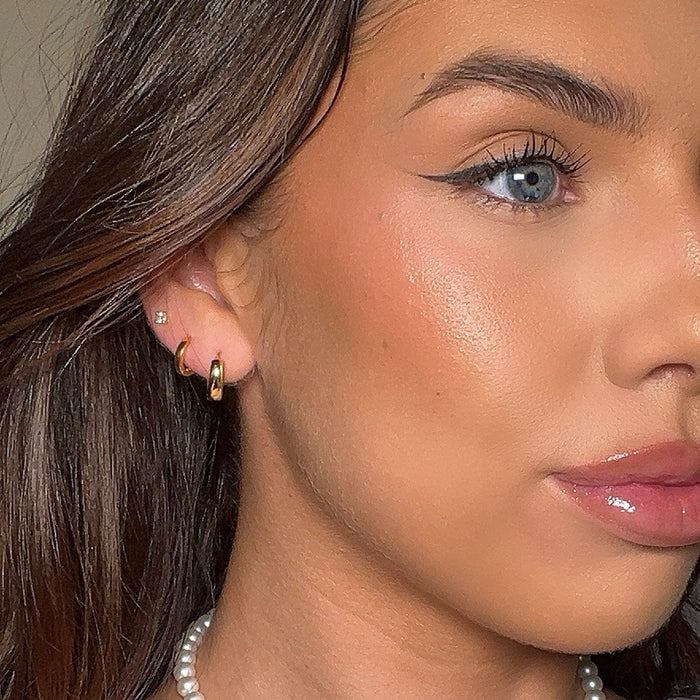
Multiple ear piercings
-
Second and third lobe piercings
-
Minimalist ear stacks
-
Everyday stud earrings
-
Anyone who prefers a less bulky backing
Because the backing sits flush behind the ear, flatbacks create a neat finish without the more noticeable shape of a traditional butterfly or bullet backing.
Are Flatback Earrings Comfortable?
Comfort is personal, but the low-profile design of a flatback can feel less bulky than a traditional earring backing.
Because the backing sits closer to the ear, they can be particularly appealing if you wear multiple earrings or simply don't like the feel of a larger backing behind your ear.
The overall comfort will also depend on the earring, the fit of the post and where the piercing sits.
Can You Sleep in Flatback Earrings?
Flatbacks are a popular choice for sleeping because their low-profile design sits flush against the ear, rather than having a bulky backing that can poke into the back of your ear when you roll over.
That said, comfort will depend on the earring style, fit and your individual piercing. If an earring feels uncomfortable or puts pressure on your ear overnight, it's best to remove it.
For new piercings, always follow the aftercare advice given by your professional piercer.
Read more: Should You Sleep With Earrings In?
Are Flatback Earrings Good for New Piercings?
Flatback jewellery is often associated with multiple and newer piercings because of its low-profile design. However, whether a particular earring is suitable for a new piercing depends on factors including the jewellery material, post length, fit and the location of the piercing.
If your piercing is still healing, follow the advice of your professional piercer and choose jewellery specifically recommended for your piercing.
Are Screwbacks Better Than Pushbacks?
Neither is universally better – they simply offer different ways of securing an earring.
Push backs slide onto the post, making them quick and straightforward to put on and remove.
Screwbacks use a threaded mechanism that twists onto the post, which can provide a more secure-feeling fastening for those who prefer that style.
The choice ultimately comes down to personal preference, the earring design and how you like your jewellery to fit
How to Choose the Right Earring Back
The right earring back comes down to the style you're wearing and the finish you prefer.
|
Earring back |
How it works |
Suited to |
|
Butterfly / Push back |
Slides onto the post and stays in place through tension |
Classic everyday studs |
|
Bullet / Bell back |
Rounded backing that slides onto the post |
Traditional stud styles |
|
Flatback |
Smooth, flat disc sits close behind the ear |
Multiple piercings and minimalist ear stacks |
|
Screwback |
Threaded backing twists onto the post |
Anyone who prefers a threaded fastening |
Earring Back FAQs
What are the different types of earring backs?
The most common types include butterfly or push backs, bullet or bell backs, flatbacks and screwbacks. Each has a slightly different design and fastening mechanism.
Are screwbacks better than pushbacks?
They offer different benefits. Pushbacks are quick and easy to use, while screwbacks use a threaded fastening that can feel more secure. The right choice depends on your personal preference and the earring you're wearing.
What is the safest earring back for sleeping?
There isn't one earring back that can be considered universally safest for sleeping. Flatbacks are a popular choice for overnight wear because their low-profile design sits flush against the ear, but comfort will still depend on the earring and the individual.
If you have a new piercing, always follow your piercer's aftercare advice.